

Heatwaves & warfare: How the EU is prioritising military spending over protecting lives
The call is coming from inside the house.

The EU and wealthy governments are not geared up to save lives. Sometimes I wonder why NGOs spend so much time explaining the deadly human cost of government legislation (or lack of) on climate change, income inequality, injustice and defence and security.
I’m sitting in a sweltering heatwave in an airless room, editing this Q&A on the devastating impact of EU militarisation. It’s difficult to focus in the heat and I keep googling lifehacks for cooling down that I don’t have the resources or landlord permissions to implement.
I test the air outside my window. Still too warm to keep them open. I close the curtains and tell myself to stop obsessing. Thousands are being killed in hotter countries than this, caught in the crossfire of political games between the US, Israel, Russia, Iran and more.
Did you know that extreme heat reduces your empathy? As well as the thousands that have died from heat stress, and the exacerbated physical health conditions, it impacts your mental health and makes you more unstable, more irritable and less able to regulate our emotions.
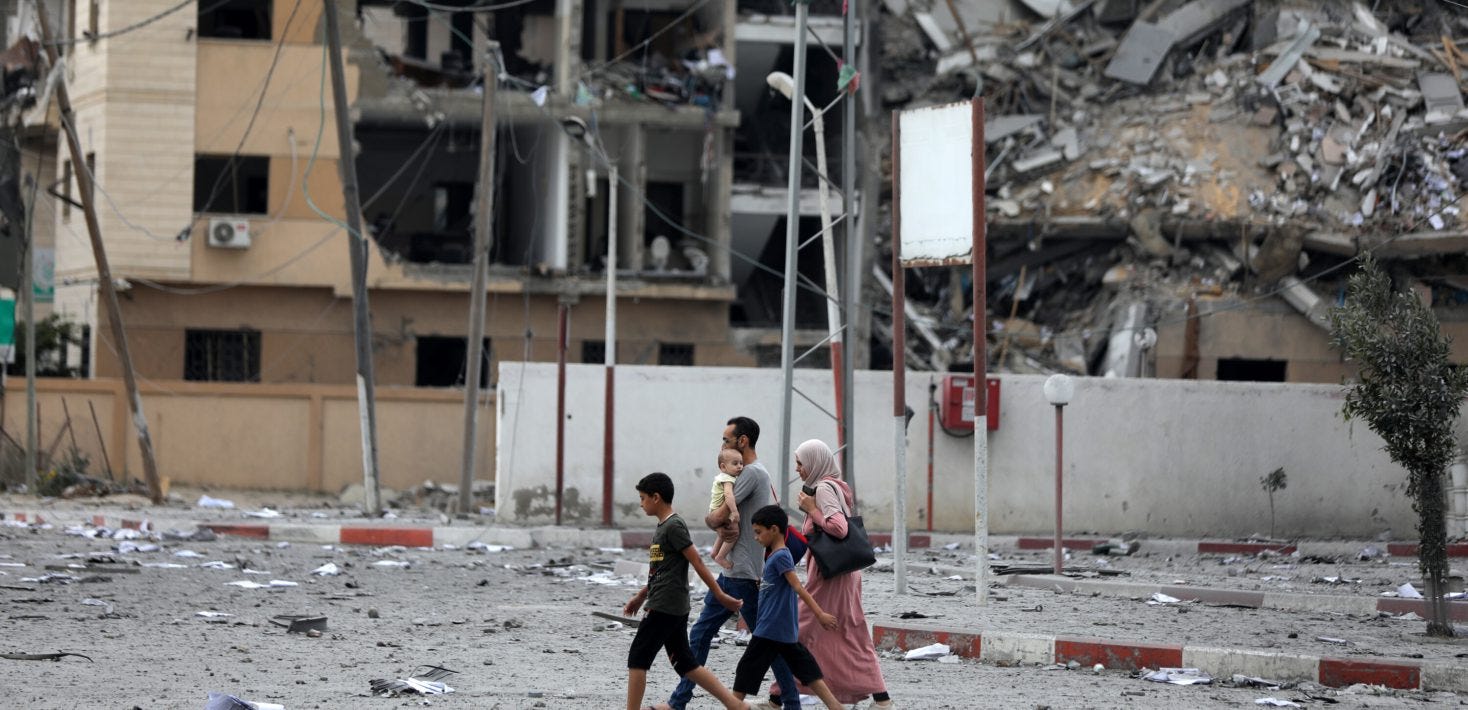
Focus. We need to talk about the war. The stupid unnecessary wars that sweep up and spit out families and cities into an unrecognisable mess. The US/Israel war has killed 3,000 in Iran and the Russian invasion has killed 15,000 Ukrainian civilians. And now the EU talks about military spending as a ‘protection’?
Reminds me of the rich boys that assault women and then get let off because they have promising careers ahead of them. They plead victimhood. Near my hometown, two 14-year rapists were let off to avoid ‘unnecessary criminalisation.’
Don’t tell me these governments give a shit about our lives, let alone the lives of people stuck outside the borders of the EU. The fortress we never asked to be in.
I take a cold shower. I’m using so much water. I sweat again when I go back to the laptop.
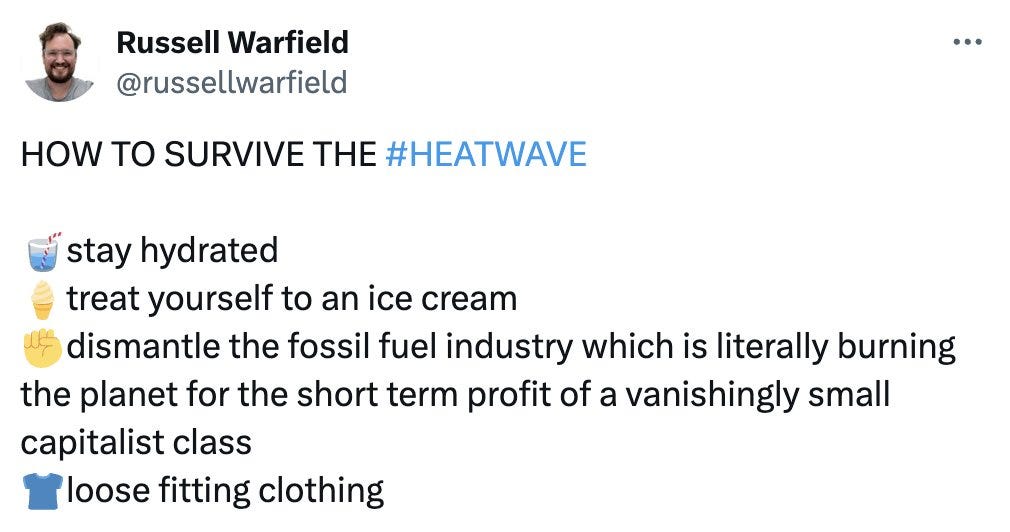
Apparently 65% of heat-related deaths are the result of climate change. More specifically, the result of decades of fossil fuel corporations’ polluting and being subsidised to do so. And the EU is diverting funds away from climate spending. For ‘defence.’
The people killed in conflict are dead as a result of military spending, but the EU claims to protect us. Is it really protection if it kills us faster? Were any of these policies ever about us at all?
What’s Going On?
UN backs historic climate crisis ruling, despite US attempts to stop resolution.
Gaza flotilla activists recount abuse and sexual assault in Israeli detention.
If you’d like to support The Green Fix, please consider becoming a paid subscriber to receive extra essays on climate justice in everyday life. You can also tip us a virtual coffee.
Focus On: Europe’s militarisation
We spoke to Emilie Tricarico from the European Environmental Bureau about why the EU is militarising and its climate impacts.

My name is Emilie Tricarico, I am an ecological economist and I work at the European Environmental Bureau. Together with the REAL Project, we published a policy brief looking at Europe’s militarisation, its structural drivers and its impacts across society and the environment. The idea was to place this militarisation trend within its political economy context.
We keep hearing that the EU is investing in defence. But what does this mean in practice?
Defence is up to each Member State, and until recently the EU could only subsidise defence investment through research & development. Following Russia’s invasion of Ukraine in 2022, the EU adopted two emergency instruments to support defence industrial capacity and joint procurement. This contributed to a shift towards using public money to fund defence procurement and capability.
In 2025, NATO raised defence targets for its members from 2% to 5%, following pressure by the US. Only Spain opted out. Around the same time, the European Commission released its European Defence Readiness 2030 (initially ReArm Europe), a package of 800 billion euros worth of defence-related investment.
The EU’s recent deregulation drive is also clear in defence spending, which aims to remove social and environmental safeguards, redirect existing EU funds towards defence spending and enable international arms transfers.
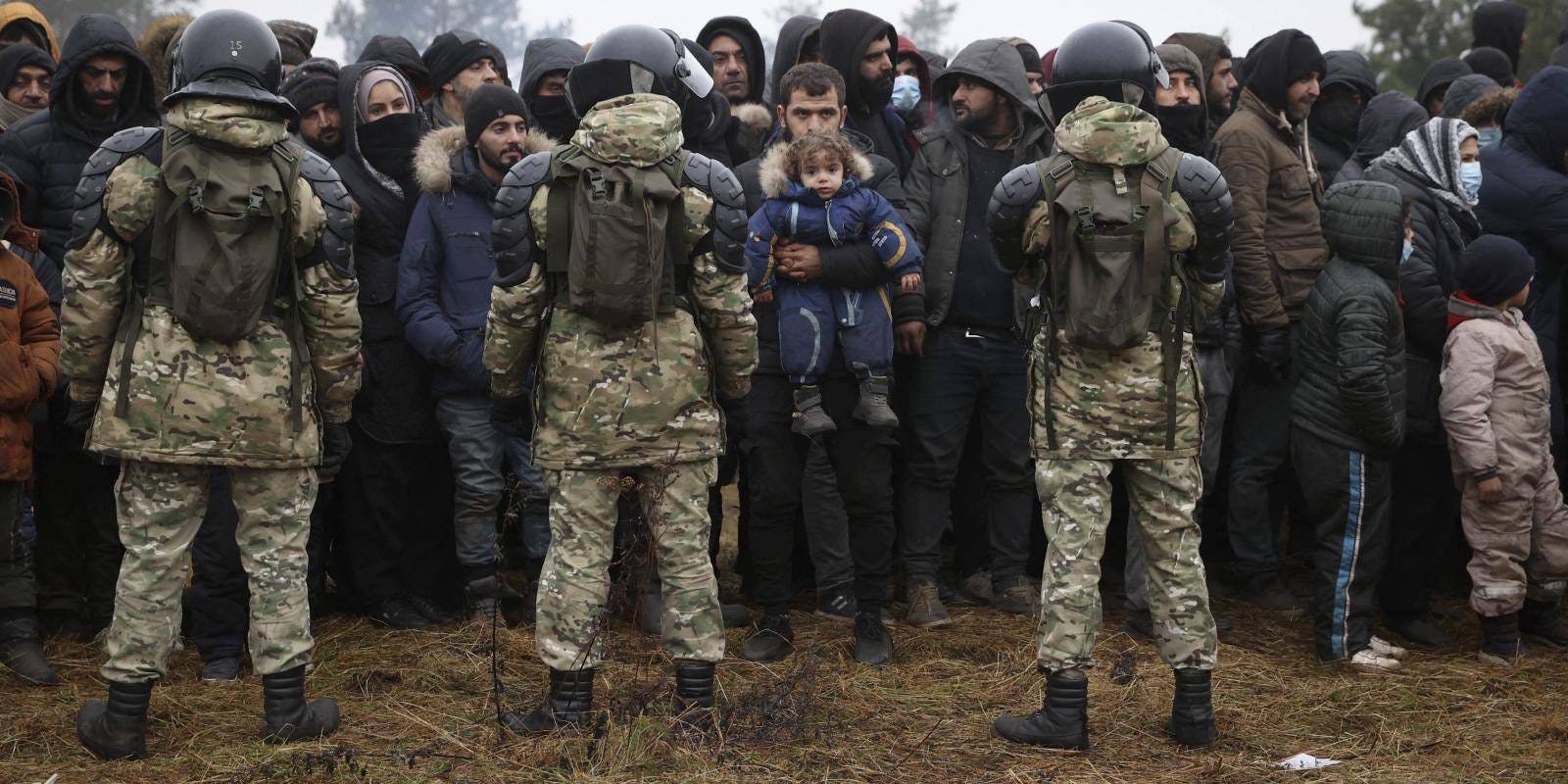
On top of this, the new multi-annual EU budget sets out to increase defence and space investment to 131 billion euros. Racial justice organisation Equinox aptly named this a “war budget” stressing that it is paired with greater spending on border control and surveillance technology to target migrants and workers.
Where is the EU getting its military funding from?
There is no common European defence project but 27 national armies. Given that the European Commission has made defence and security one of its priorities, European states are required to invest in defence by redirecting public spending towards the military.
Under EU rules, Member States must make sure their debt and deficit don’t go over or under a certain threshold. The Commission decided to relax the rules when it comes to defence spending (unlike for other priorities like the green and just transition).
However, the New Economics Foundation warned that even under relaxed fiscal rules, EU member states will struggle to meet their 3.5% NATO targets without cutting into other budgets, raising taxes or changing fiscal rules altogether. The new social spending cuts we are seeing across Belgium (18 billion euros), and several other European countries, signals a huge redirection of public spending towards the military, including through purchases of offensive weapons like F-35 bomber jets that Israel uses in its genocidal war in Gaza.

Why is the EU re-arming now? Are we under attack?
This is a crucial question and we must differentiate defence from militarisation. The Commission claims that these new measures are about safeguarding Europe’s security and creating Europe’s own independent defence capacity. In reality, the EU is going down the path of militarisation which is about a complete restructuring of our societies and economies around the logic of military strength and war preparedness. All sectors will be concerned (school curricula is being changed, academic research is being funded by the military, etc.)
The US, which has been the unique global hegemon since the end of WWII, is under intense competition from rising powerhouses like China. The illegal wars the US is waging together with Israel are its attempt to secure access to critical resources and keep its position of power. Europe has long been a vassal to the US empire and still remains subservient to US interests via NATO and our dependence on US military firms, tech and digital giants.
While claiming to build its own military-industrial complex, the EU is in fact following the US in its imperialist pursuits to maintain global dominance and competitiveness in a world where economic growth becomes increasingly constrained.
How does militarisation impact the climate and environment?
Globally, the military sector is responsible for around 5.5% of global carbon emissions (the US being the largest polluter). Research found that the new NATO defence spending targets would add an extra 132 million tonnes of greenhouse gases into the atmosphere over the next decade. The sector is a huge consumer of fossil fuels and therefore should comply with carbon emissions reduction targets. However, military emissions are still not accounted for within UN climate protocols, thanks to successful lobbying by the US military.
The overall environmental impact from wars, military bases and training grounds is unprecedented. From water and soil pollution to environmental damage caused by explosives, ammunition, heavy machinery, heavy metals, chemicals and other toxins. US journalist Abby Martin looked at this impact at the US-level in her recent documentary The Earth’s Greatest Enemy which illustrates the enormous scale of the environmental and public health damage caused by this institutional polluter.
The military is also driving the push towards resource extractivism. The EU’s list of strategic raw materials listed under the Critical Raw Materials Acts maps almost precisely onto NATO’s own list (except for one mineral). Under the guise of green transition objectives, the EU is securing its access to critical minerals to benefit powerful military and corporate lobbies.
How can the EU better balance security, the climate and public wellbeing?
Security cannot be separated from safeguarding our planet and societies’ wellbeing. The climate and nature crises indeed pose the largest security threat to our societies. Something that the military lobby has understood well through its adoption of this climate securitisation messaging and by promoting itself as an essential actor in the face of climate breakdown.
But any extra spending on the military adds more carbon emissions and environmental damage. Different solutions must be found so that defence doesn’t come at the expense of our planetary and human health. Lithuania for instance is restoring its peat bogs, which not only trap carbon emissions but also acts as a barrier against military tanks.
Post-growth research provides evidence that the capitalist growth engine is responsible for our present overlapping crises, including the unprecedented surge in global conflicts which is bound to trigger global economic crises. We must therefore reconsider the entire organisation of our economies.
In the brief, we put forward some key recommendations to reform European trade to economic governance and industrial policy, as well as demands to reduce military budgets and limit the use of conventional weapons and new military technologies. These recommendations include, amongst others, a complete fossil fuel phase-out, green industrial planning and public ownership of essential sectors, a wealth and windfall profit tax, diplomatic tools and orienting foreign policy towards peace and cooperation.
What can readers do to speak out against militarisation?
We have seen with the genocide in Gaza and now with militarisation, that much of European civil society is staying silent. Peace groups, some trade unions and the more progressive organisations, on the other hand, have been organising through the European platform StopReArm Europe.

On Sunday 14th June, they are organising a demonstration in Brussels under the banner Welfare, not Warfare. Through the NGO workers’ collective FairCSOs, we are ramping up our mobilisation efforts for this action. As a worker, you can add your name to our open letter and join us on the demo (we will have our own NGO bloc!)
So Now What Do I Do?
LEARN SOMETHING
Read: Why do the media still report on deadly heatwaves using pictures of people having fun at the beach?
Read: Fascism, and why we all need to support trans rights, no matter what issues we’re working on.
UK: Women Against the Far Right are launching in London! Join their launch party on the 15th June. Tickets from the highly specific price of £6.13.
DO SOMETHING
The UN is seeking input from young activists on their experience of civic space repression. Deadline 5th June.
Submit your event for London Climate Action Week by the 12th June.
The Global Citizen Waislitz Awards are open for nominations of people who have done exceptional work to end poverty. Close 14th June.
Stay in the loop
You can follow The Green Fix on Instagram and LinkedIn. Connect with Cass on Instagram and LinkedIn.