


When I was growing up, I believed that I was one of the most privileged people around. White, middle-class British woman from a quiet leafy town with a good free education and a family who could pay for my school trips.
I wasn’t wrong. I am privileged. But I was wrong about how close the gap between classes was. See I grew up next to a private school for boys. I believed that physical proximity was the same as social and financial proximity.
There were signs I was wrong - like when I took a first job washing dishes in the boarding school kitchens on the street I grew up on. An upper-class teacher asked me, while handing me her used mugs, “Where are you from? You don’t sound like you’re from here.”
Anyone else would have called my accent posh. But the real posh people, they knew I wasn’t one of them.
Or when I moved to Belgium and was talking to a university student who lived alone in a two-bedroom flat on the street of his campus. He had no part-time job. I asked how he could afford to live there and he shrugged. “Well my parents bought the flat to help me during my studies.” As if it was the most obvious answer in the world.
Then I started working on wealth inequality. Billionaires earning $2,500 per second in 2025. The rich, 4,000 times more likely to hold political office than any regular person.
I wasn’t wrong about my privilege. But the ceiling was so much higher than I thought. The chasm between classes was unfathomably large.

And even if we are not part of the 0.1% flying around by private jets, in progressive movements we reinforce the class divides by failing to recognise them. We’re more comfortable speaking abstractly about the importance of including the marginalised and the working class, than including them. I have often wondered, when in the European Parliament or a progressive conference, why we don’t just ask the cleaner or the caterer for their opinion.
We deliberately set up parameters for how and when different groups in society can have a place in political advocacy, we establish unspoken etiquette rules, we idealise or stigmatise the working class and the racialised working class far more easily than we talk to them.
The upper class, particularly the white male 0.1%, have dominated the narrative over how our society works for too long. I do not want to afford them more space. We should be building ties with the working class, the true experts of what it means to live in a destructively oppressive capitalist system.
Cover image credit: Rose Zehner at a Citroen workers’ strike (1938)
What’s Going On?
Santa Marta: Key outcomes from first summit on ‘transitioning away’ from fossil fuels.
British universities paid security firm to ‘spy’ on pro-Palestine students.
US tech firms successfully lobbied EU to keep datacentre emissions secret.
Queer Nigerian men are outing their attackers online – and themselves.
If you’d like to support The Green Fix, please consider becoming a paid subscriber to receive extra essays on climate justice in everyday life. You can also tip us a virtual coffee.
Focus On: Working Class Climate Activism
Cass Hebron speaks to Emma River-Roberts on how to better include working class activists in climate movements.
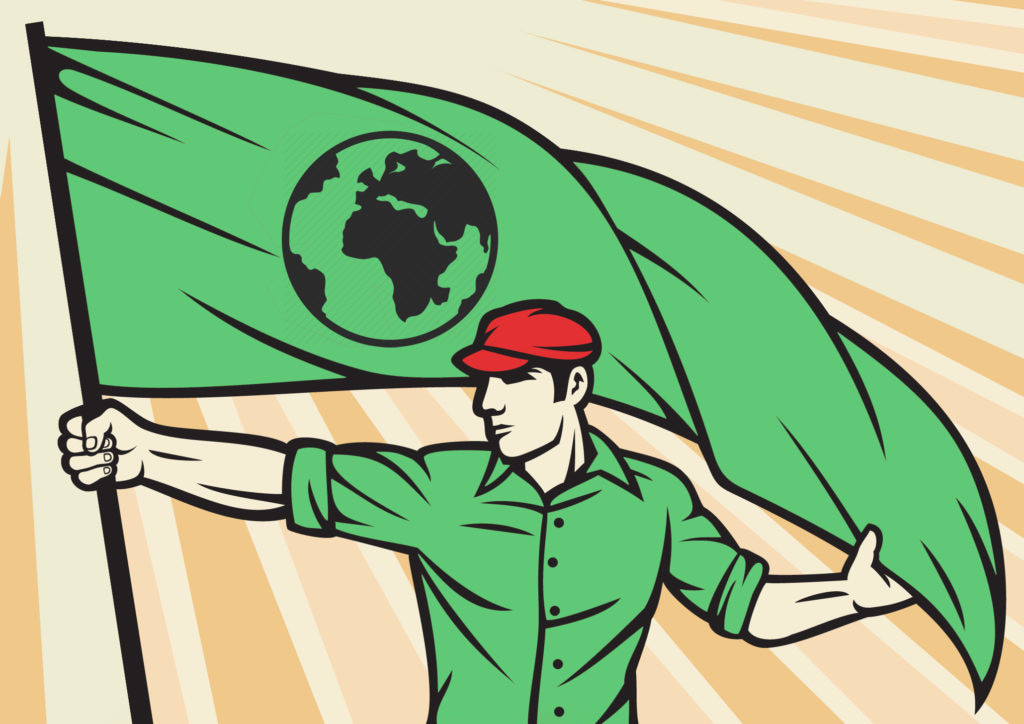
I’m Emma River-Roberts, Founder and Director of the Working Class Climate Alliance (WCCA). The WCCA is an international advocacy and education non-profit dedicated to raising awareness about working class forms of environmentalism and working class needs, making the case for greater inclusion of working class people in the climate movement and in environmental decision making.
What inspired you to start the Working Class Climate Alliance?
I started it after several years in the environmental movement and in academia, where I encountered a great deal of regressive attitudes about working class people. It is still common, for example, to use the term “working class” as shorthand for white men in industrial professions, erasing the diversity of working class experience. There was also a widespread assumption that working class people are ignorant or uninformed about climate change, despite their long history of campaigning for social and environmental justice.
I also met significant resistance when I raised the topics of class privilege and classism. Many people were willing to discuss social class in the abstract sense, but were unwilling to engage when it required confronting on their own biases or changing their behaviour.
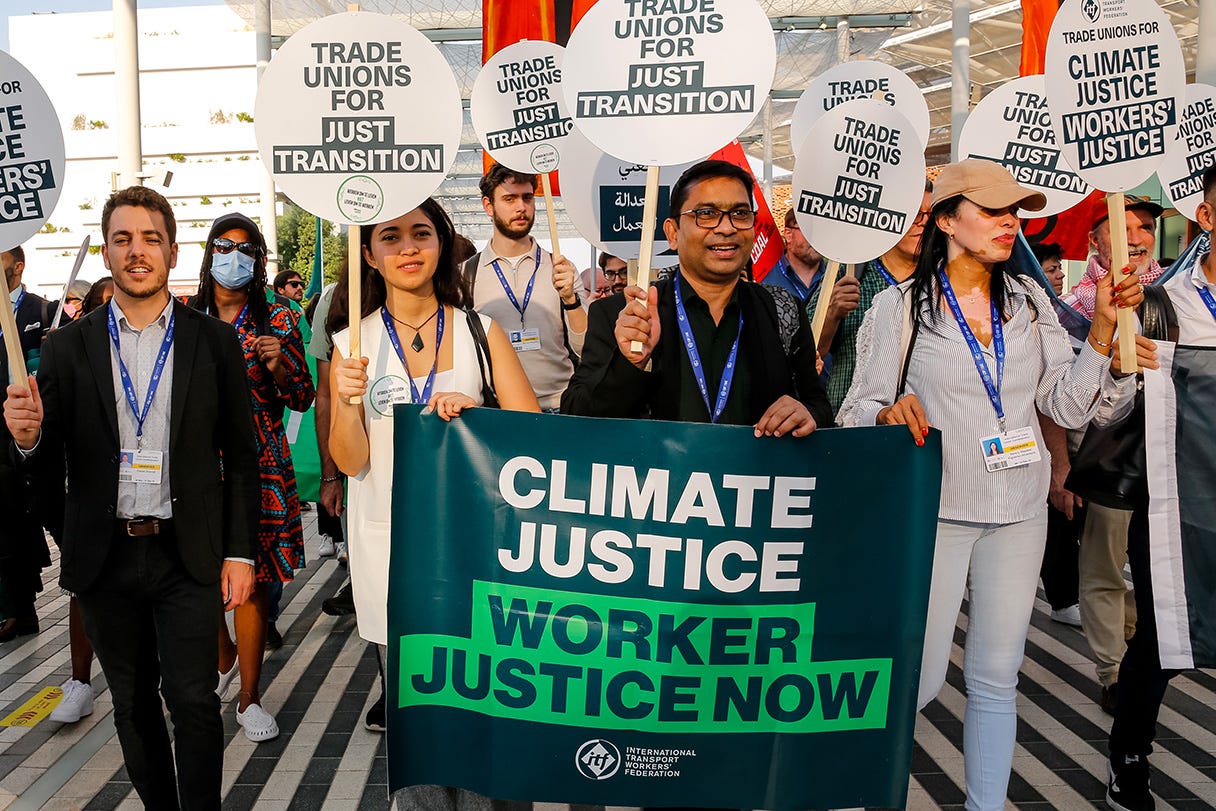
I also realised there were no organisations in the UK focused specifically on working class environmentalism, class, and classism. Given my experiences, I felt there was nowhere I could do this work, even though it was clearly needed. So I decided to start the WCCA and see where it goes!
The climate crisis has always disproportionately impacted lower-income groups. But how does elitism and class privilege show up in climate justice movements?
It shows up in ways that are sometimes overt but often quite subtle. One of the most common is the assumption that working class people need to be educated about climate change, rather than recognised as people who already have relevant knowledge and experience.
There’s also the question of who gets to set the agenda. Climate justice movements tend to be led by people from more privileged backgrounds, which shapes everything from the language used to the strategies pursued. When working class people do engage, they’re often brought in as case studies or consulted rather than treated as equal participants with decision-making power.
Things like unpaid volunteering, expectation of availability during working hours, jargon-heavy communications, and networking cultures that favour certain social backgrounds all create barriers that are rarely acknowledged, let alone addressed. All of which determines who can maintain involvement over time and who gets worn out and pushed out.
In many EU countries, the working class are increasingly voting right-wing or far-right. How can progressive movements regain the trust of working-class voters?
I think progressive movements need to start by being honest about why that trust was lost in the first place. A lot of working class people don’t feel seen or heard in these spaces. When their concerns are dismissed as ignorance, or when class is treated as less important than other forms of oppression, it sends a clear message about whose experiences actually matter.
Regaining trust also means engaging with the material conditions of people’s lives. Climate policy, for instance, has to be credible on questions of cost, jobs, and economic security if it’s going to land with working class communities. People aren’t going to back a green transition that feels like it’s being done to them rather than with them.
Are there any examples of political parties, campaigns or initiatives that you find effective in listening to & representing the working class?
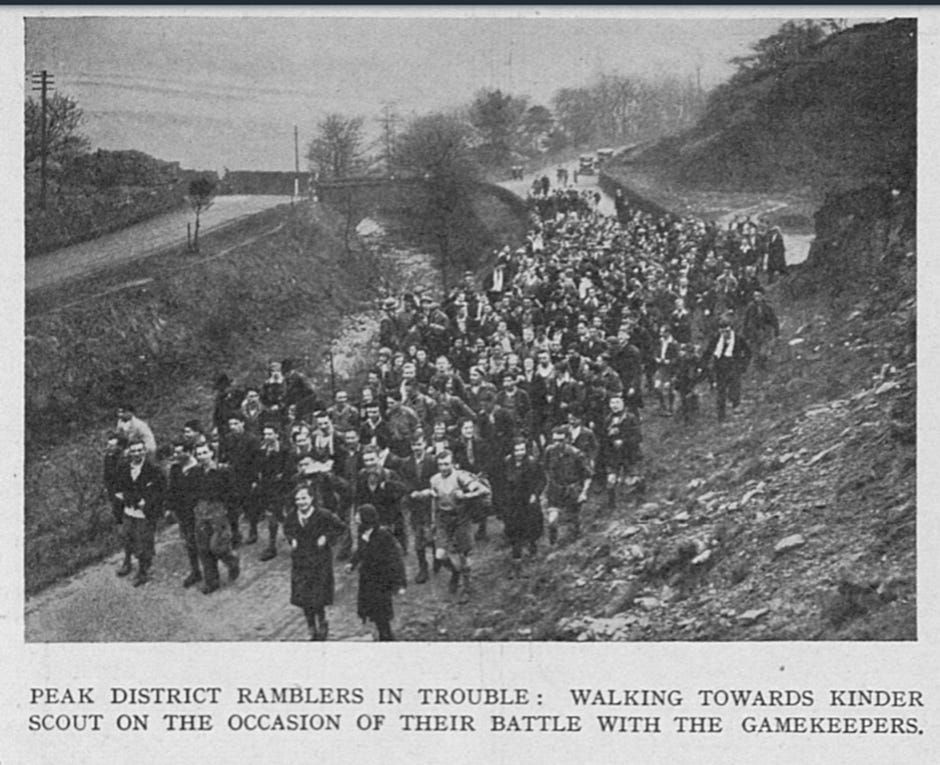
Three examples stand out for me. The first is the Right to Roam. Many people don’t realise that we have the working class to thank for our ability to walk freely in the countryside. Between 1760-1820, a wave of Enclosure Acts enabled landowners to enclose six million acres of land in England, removing the public’s right of access.
In the 1930s, Manchester factory workers (who became known as ramblers) organised mass trespasses in the Peak District, asserting their inherited right to use the country’s highways. Their lobbying of political parties eventually led to Right to Roam legislation coming into effect across England and Wales in 2005.
The second is the GKN Factory Occupation in Florence, Italy. When the factory’s owners shut down production in 2021 and fired all 422 workers, the workforce occupied the building and launched an international solidarity campaign. Rather than simply resisting the closure, the workers developed a plan in collaboration with academics and scientists, to transform the factory into a co-operative producing socially and ecologically beneficial goods such as cargo bikes. The occupation is still ongoing – making it the longest occupation in Italian history.
The third is RISE St. James, a grassroots organisation in Louisiana that campaigns against the concentration of petrochemical plants in their community, which is situated on a stretch of land nicknamed Cancer Alley due to the significantly higher rates of cancer and respiratory disease amongst its residents compared to the rest of the US.
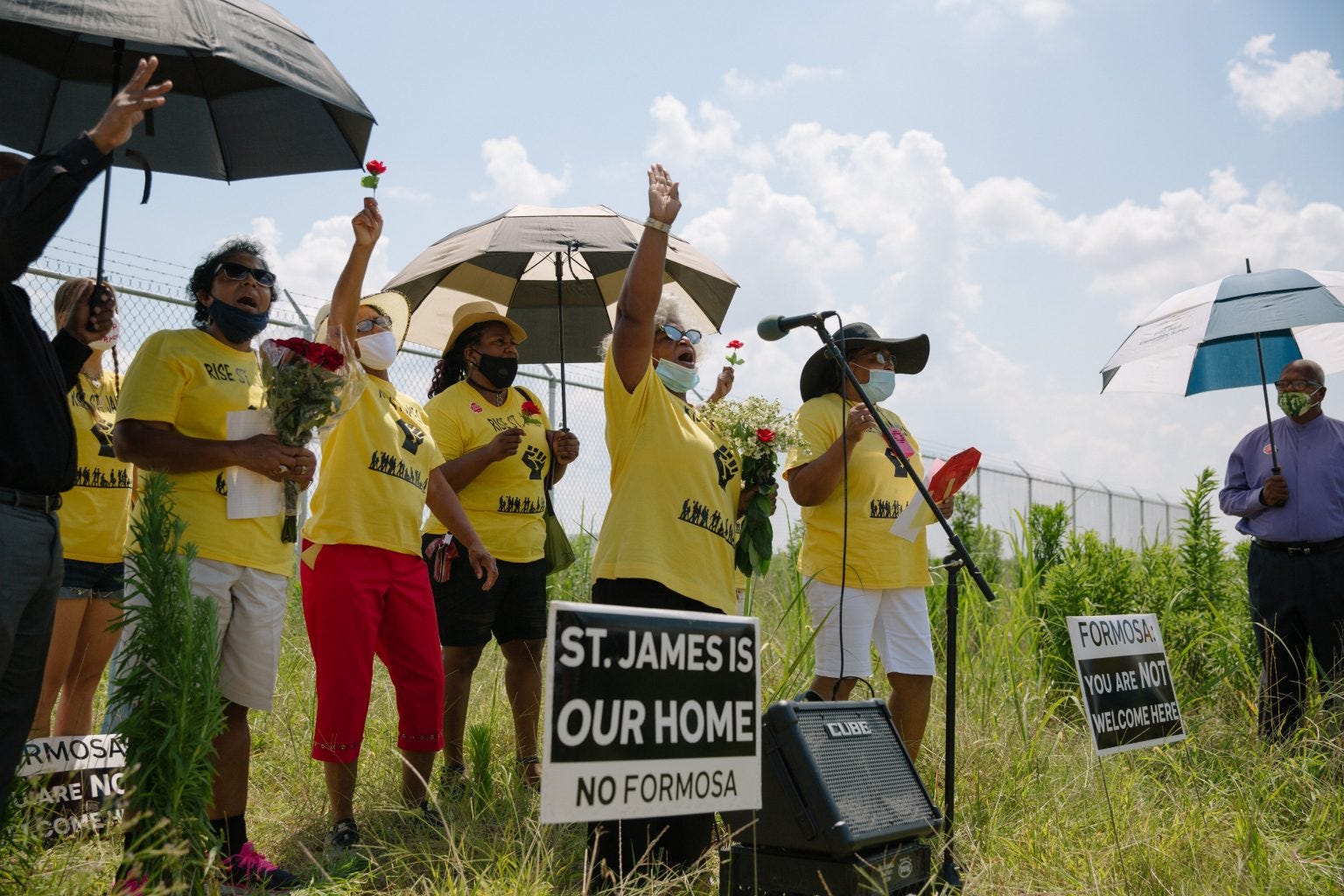
When Formosa Plastics Group proposed a chemical plant that would have doubled air pollution levels in the area, RISE St. James launched a legal challenge and built local support through door-to-door campaigning, collaborating with legal professionals, town hall meetings and marches. In 2025, they won the lawsuit.
How can readers support the work of the WCCA?
Read about social class, working class histories, and the lived experiences of working class people – particularly from working class voices themselves. So much of the disconnect between progressive movements and working class communities comes down to a failure of understanding. We can’t effectively connect with, or advocate alongside people whose lives we haven’t made the effort to understand. That includes addressing classism within progressive movements themselves, which is often an uncomfortable conversation but a necessary one.
Staying connected is another simple step. Signing up to our newsletter keeps you up to date with our work, campaigns, and events, and following and sharing our content helps us reach people beyond our existing networks.
If you’re in a position to contribute financially, the WCCA runs entirely on limited resources, and donations through our website go directly towards sustaining and growing this work.
If you’re looking to better understand working class communities, address classism, or make your climate work more inclusive, we offer consultancy, skills training and public speaking services.
So Now What Do I Do?
LEARN SOMETHING
Read: Polanski, Mamdani, and the Others: Time for Left Economic Populism?
Force of Nature have launched a 3-part online programme for young activists (18-35). Apply to join by tomorrow 7 May.
The Media Diversity Institute is open for applications to the Campaign Academy, for young activists in Spain, Italy, Belgium, Portugal, Germany, or Hungary. Deadline 15th May.
DO SOMETHING
The Imagination Practice Fund is accepting applications until the 10th May.
Apply for The National Geographic Society & The Nature Conservancy Externship by the 17th May.
The Kofi Annan NextGen Democracy Prize is accepting applications until the 17th May.
Stay in the loop
You can follow us on Instagram, Bluesky and LinkedIn. Connect with Cass on Instagram and LinkedIn.
solid perspective that more people should consider; I would’ve like to see more on substantive policy on how the two work together as well, for instance like what stop greed build green put together: https://stopgreedbuildgreen.climateandcommunity.org/posts/agenda
Thank you. I write about this same dynamic about environmental health, many who push for consumer choices only away from toxic chemicals miss the larger environmental justice impacts.